Project Overview
These Course Projects were Focused on High-Speed Machining Techniques aimed at Increasing Material Removal Rates and Reducing Tool Chatter
to Improve Tool Life. We Examined Cutting Tool Geometry, Tool Dynamics through Resonance Frequency, and Performed Multiple Tests with Different Speeds and Feeds.
Key Contributions & Responsibilities
- Analyzed Tool Geometry, Materials, Dynamics to Evaluate Resonance Frequency to Find Optimal Feeds and Speeds.
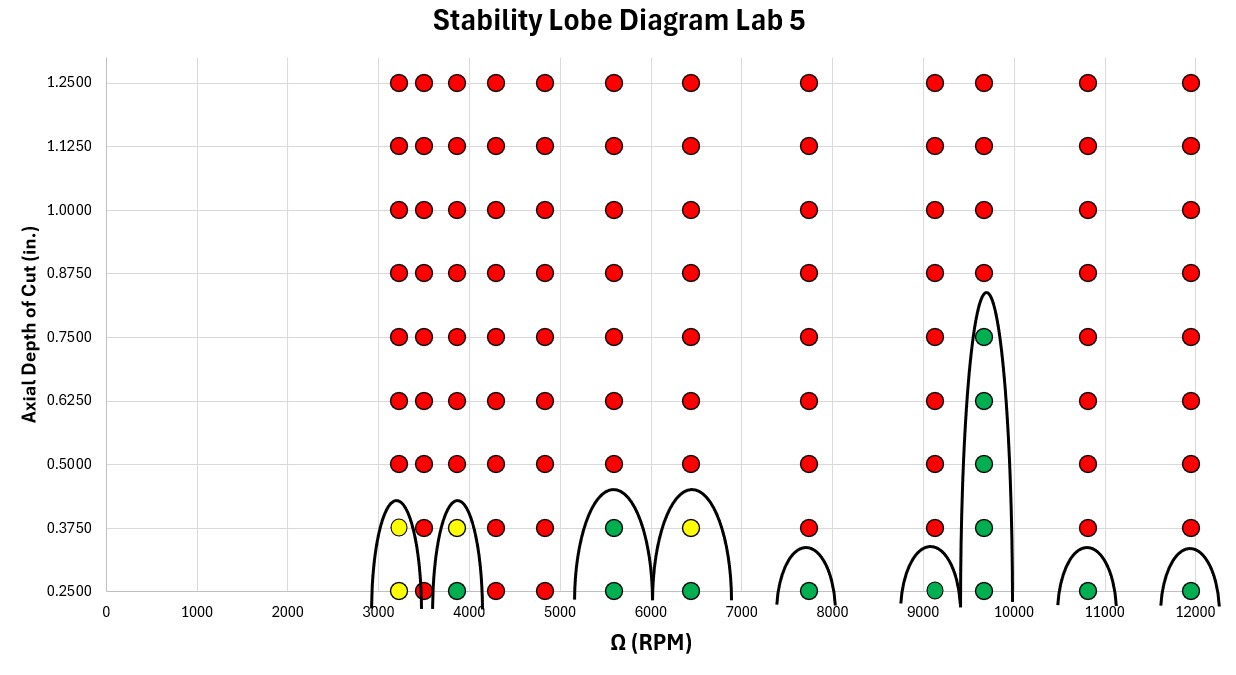
- Developed Stability Lobe Diagrams to Predict and Avoid Chatter.
- Leveraged CNC Machine Programming Skills to Program Moderately Complex Parts across Multi-Setup and Multi-Axis (3 Axis) Operations.
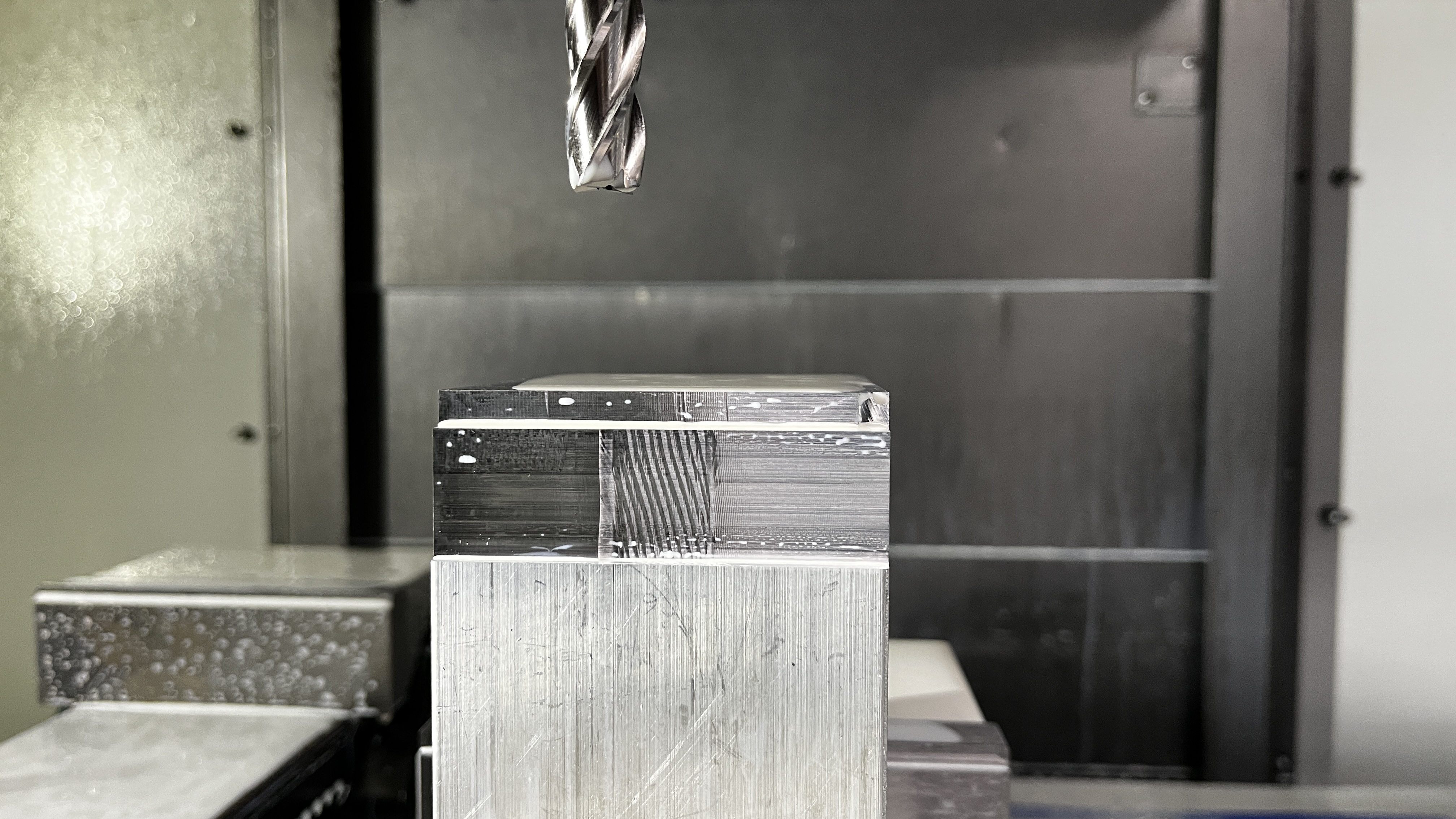
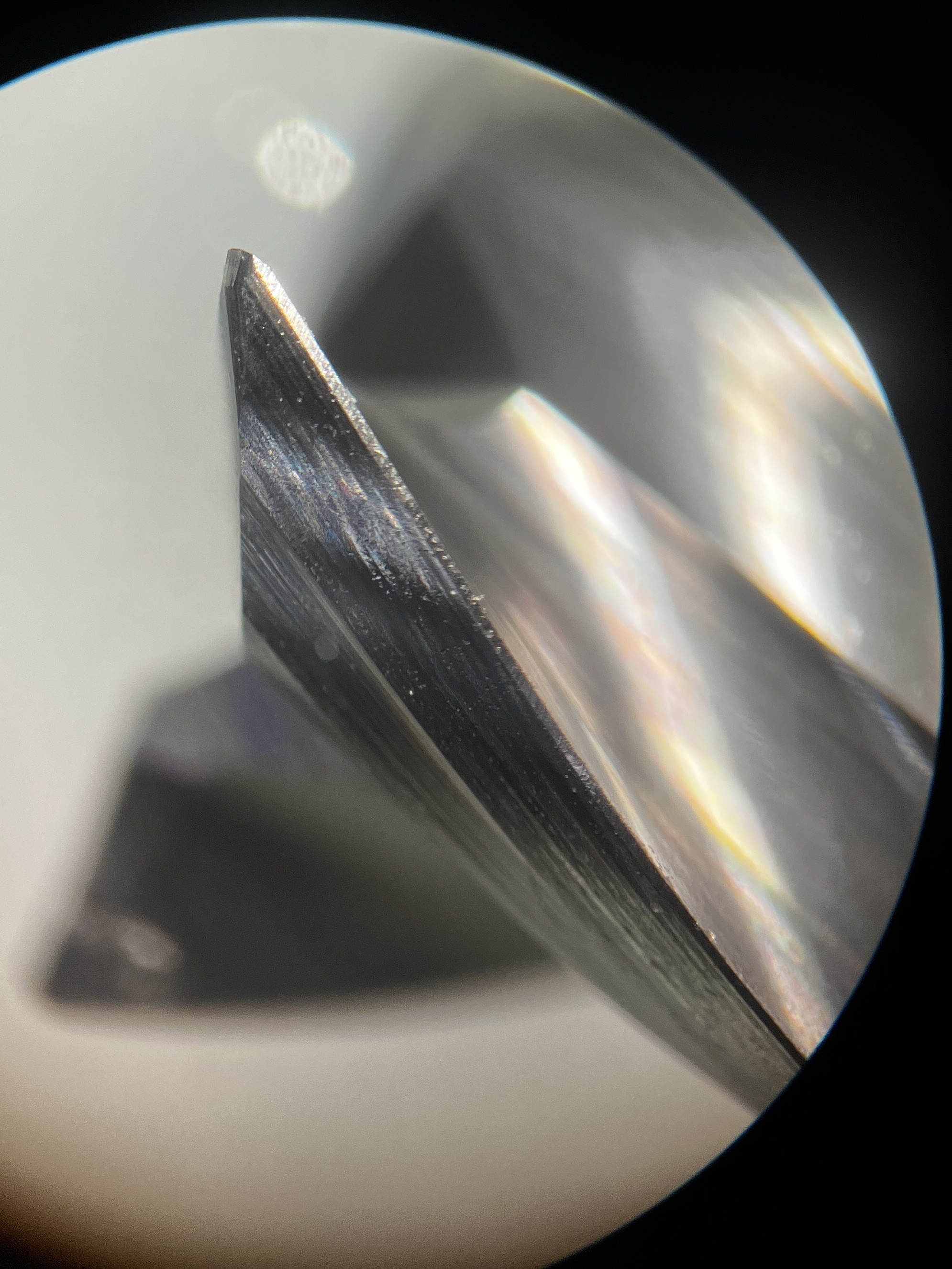
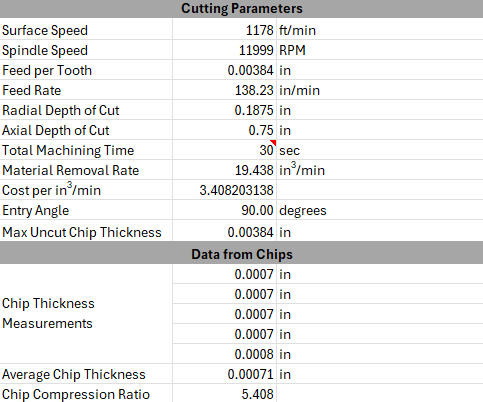
- Conducted Experiments Using an Endmill to Test and See how Far a Tool can be Pushed When trying to Achieve High Material Removal Rate (MRR).
Skills
- Manufacturing:Precision Machining through Modern Techniques
-
Cutting Tool Dynamics & Geometry:Advanced Understanding of Cutting Tool Geometry and
Dynamic Behavior (through Resonance Frequency) to Improve Stability and Process Efficiency.
-
Material Science: Obtained Knowledge on Cutting Tool Materials &
Coatings with Effects on Tool Life
- CNC Programming & Operations:Proficient in Using CAM Software (Fusion)
and CNC Machines for Multi-Axis Operations and Setups for Complex Parts.
Outcome
These Projects Yielded Positive Insights into High‑Speed Machining Strategies that Significantly
Reduced Tool Chatter and Improved Tool Life. The Development of Stability Lobe Diagrams provided Predictive Judgement to avoid Process Instability,
while our CNC Programming Expertise Streamlined Complex 3-axis Operations during Testing. Additionally, Rigorous Endmill Experiments confirmed
how far a Tool could be Pushed to Achieve a High Material Removal Rate (MRR), Resulting in Enhanced Machining Efficiency.